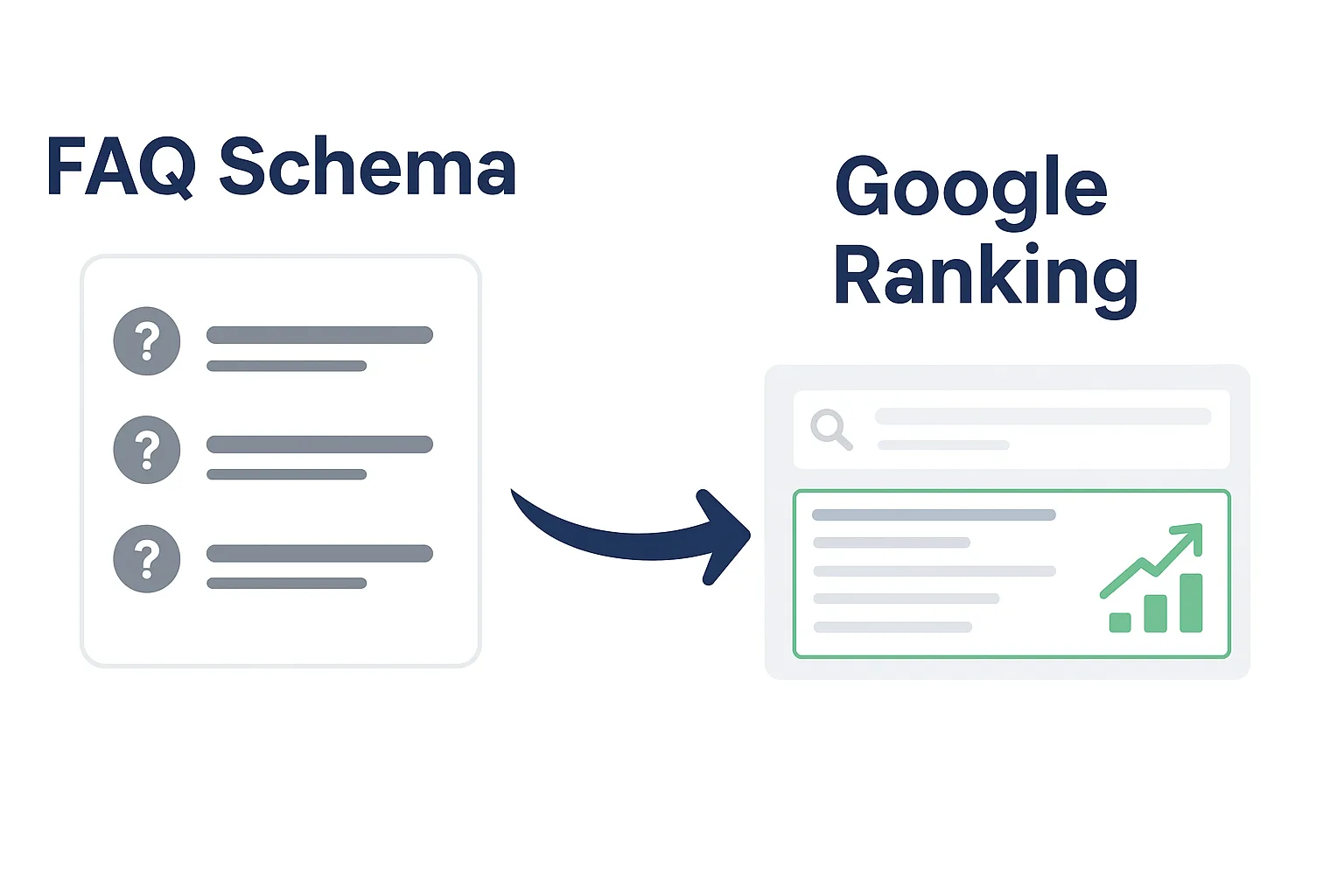
The Impact of FAQ Schema on Google Search Rankings — An In-Depth Analysis Based on Official Documentation
Introduction
In the world of modern SEO, the use of structured data has become one of the primary ways to improve the visibility of pages in search results. One of the most popular formats for a site's “Frequently Asked Questions” (FAQ) section is FAQPage schema. The impact of FAQ schema on Google Search rankings, and the correct use of this markup, can lead to a Rich Result in Google search results and indirectly affect user experience and, consequently, rankings.
In this article, we first examine Google's official documentation and guidance on FAQPage, then analyze how this schema can affect SEO, review its benefits and risks, explain technical considerations and best practices, and finally assess whether investing in FAQ Schema is worthwhile.
Part One: Google's Official Documentation on FAQPage
To understand the impact of FAQ schema on Google Search rankings in depth, we should first review Google's official documentation to learn how Google recommends implementing FAQPage and what limitations apply.
1. Defining FAQPage in Google's Documentation
- Google Search Central has a dedicated page for
FAQPagethat explains how to add this type of structured data using JSON-LD or Microdata. (Google for Developers) - Google emphasizes that
FAQPageis appropriate when your page contains a set of frequently asked questions with fixed answers. If users can submit different answers (as on forums), you should useQAPageinstead. (Google for Developers) - According to Google's documentation: “Answers should be unique (one specific answer for each question).” (Google for Developers)
- Google also notes a “Feature Availability” condition for this schema: “FAQ rich results are reliably shown only for authoritative sites, particularly in certain domains such as government or health.” (Google for Developers)
- Google's “Guidelines” section covers acceptable content, how questions and answers should be presented, and recommendations for preventing abuse (such as promotional content). (Google for Developers)
2. Limitations and Warnings from Google
- Google announced on its official developer blog (Google Search Central Blog) that FAQ structured data “is only for official questions and answers” and should not be used on pages where users can submit their own answers (such as forums)—use QAPage in those cases. (Google for Developers)
- Google also recommends that “FAQ content must be fully visible on the page.” In other words, questions and answers should not exist only in JSON-LD schema; they should be visible to users on the page (especially if Google wants to display them). (Google for Developers)
- The documentation points to tools for validating FAQ markup: Rich Results Test, as well as Search Console reports for checking errors and warnings. (Google for Developers)
- Another important point: Google warns that incorrect use of FAQPage (for example, for promotional purposes or to fill pages with fake questions) may cause the markup to be ignored or even have negative consequences. (Google for Developers)
Part Two: Analyzing the Impact of FAQ Schema on Google Search Rankings
Now that we have reviewed Google's official documentation, let's examine how FAQ schema can affect your SEO—including its potential benefits and risks for Google Search rankings.
Benefits of Using FAQ Schema (Based on Google's Documentation and SEO Analysis)
- Greater likelihood of appearing as a Rich Result
- When
FAQPageis marked up correctly, Google can display it as a Rich Result block in search results (questions and answers). This makes your result appear larger and more prominent. (Google for Developers) - A Rich Result can increase the click-through rate (CTR), because users may be more drawn to clicking on enhanced results.
- When
- Reach Google Assistant and voice-search users
- According to Google's documentation, pages with FAQPage schema may also appear in Google Assistant as an “Action,” meaning your question and answer may be read directly by the voice assistant or presented in a conversational format. (Google for Developers)
- This is especially important for voice search, since users are looking for quick, concise answers.
- Improved search-engine understanding of page content
- Schema helps Google understand how parts of a page are organized: “This is a question,” “This is an answer.” This better understanding may lead to more effective presentation in results.
- If the FAQ content reflects important topics relevant to the page's overall subject, it signals to Google that your page is comprehensive and valuable.
- Improved user experience (UX)
- When users see a question and answer in search results, they can get closer to finding what they need more quickly, increasing their satisfaction.
- Likewise, if users visit the page and find the FAQ section, they may have a better user experience and spend more time on the page (increased time on page).
- Potential to reduce the bounce rate
- When users find a useful answer, they are less likely to leave the page immediately.
- A lower bounce rate and greater engagement are positive signals for search engines and may help improve rankings.
- Greater credibility and trust (E-A-T / E-E-A-T)
- A well-written FAQ section shows that your site is knowledgeable, because it answers questions users may have.
- From Google's perspective, creating valuable, transparent, and accurate content (and marking it up) can help address concerns about expertise, authority, and trust (E-A-T / E-E-A-T).
Part Three: Risks, Limitations, and Drawbacks
Despite its many benefits, using FAQ schema is not always risk-free. There are some risks and limitations to its impact on Google Search rankings:
- Limited Rich Result display
- Even if you implement FAQ schema correctly, Google does not guarantee that it will appear in results. Google's documentation states this explicitly. (Google for Developers)
- Google may limit FAQ display, or not show it at all, for sites with “lower authority.”
- Prohibited or promotional content
- If questions or answers are purely promotional (advertising a product or service or making a sale), Google may ignore the schema or even consider it abuse. Google's documentation warns about this. (Google for Developers)
- Prohibited content, such as abusive, hateful, or dangerous material, can also prevent display. (Google for Developers)
- Duplicate schema across multiple pages (Duplicate FAQ)
- If similar FAQs are repeated across different pages on your site and you add schema everywhere, you may encounter warnings in Search Console, or Google may consider only some of them. (Kate Khoury Portfolio)
- Some users have also reported that using more than one
FAQPageschema on a page is treated as an error by Google or Search Console. > “Only one FAQPage type should be used per page.” (Reddit)
- Mismatch between visible content and JSON-LD
- Google emphasizes that the question-and-answer content must actually be present on the page (visible to users) and not exist only in JSON-LD; otherwise, the markup may be ignored. (Google for Developers)
- Some users have reported unexpected Google behavior when FAQ content is in the schema but not visible on the page. (SEO experiences in forums have been cited.)
- Structural and validation errors
- If you write the schema incorrectly—for example, make an error in JSON-LD, omit
mainEntity, or use disallowed HTML tags in an answer—Google may reject it or not show a Rich Result. - Important: After adding schema, be sure to use Google's Rich Results Test tool to check its validity. (Google for Developers)
- You should also monitor Structured Data status in Search Console and check for errors or warnings. (Google for Developers)
- If you write the schema incorrectly—for example, make an error in JSON-LD, omit
Part Four: Best Practices for Implementing FAQ Schema (Following Google's Recommendations)
Based on Google's documentation and SEO practitioners' experience, here is a detailed, step-by-step guide to using FAQPage schema effectively:
- Make sure the FAQ is a genuine part of the page
- The questions and answers must be on the page (whether fully displayed or in an accordion, tab, or clickable element).
- Use the schema only when this is a formal, fixed FAQ section, not a forum or user Q&A section. According to Google, if users can add answers, it is better to use
QAPage. (Google for Developers)
- Write clear, complete, and concise questions and answers
- Questions should reflect what users actually ask—not overly technical terms or keyword-stuffed phrasing.
- Answers should be complete and useful, and may include permitted HTML such as
<p>,<ul>,<li>, and<a>(Google supports some HTML tags in answers). (Google for Developers) - Avoid answers that are too short (just a few words, for example) or so long that they confuse users.
- Write authoritatively and naturally, without Keyword Stuffing
- Avoid artificially repeating keywords in questions or answers.
- Use natural, user-appropriate language. Questions should sound like things users would genuinely ask.
- Use one FAQPage schema per page
- Include only one
FAQPageper page. Using multipleFAQPageschemas on one page may cause errors or unexpected behavior. (SEO forum experiences support this point.) (Reddit) - If your FAQ is divided into several sections (for example, shipping, refunds, and support), it is better to put them in a single
mainEntityarray in JSON-LD rather than in several separate blocks.
- Include only one
- Validate the structured data
- After adding markup, be sure to use Google's Rich Results Test tool to check for fundamental errors and warnings. (Google for Developers)
- Also check the “Enhancements” section in Google Search Console to see the status of your FAQPage items (errors, warnings, and valid items).
- Sitemap
- After adding FAQPage, submitting a Sitemap to Google is recommended so Google can crawl new or updated pages sooner. Google's documentation makes this point. (Google for Developers)
- If you make changes to the FAQ (add a question, remove one, or edit an answer), be sure to update the Sitemap.
- Regular monitoring
- After implementation, monitor how Rich Results perform: Are your questions appearing in the SERP? Has CTR increased? Are there errors in Search Console?
- If you add a new FAQ or change questions, validate it again and allow time for Google to crawl it.
Part Five: Long-Term Impact of FAQ Schema on Google Rankings and Strategic Conclusion
This section presents a strategic analysis of the long-term impact of FAQ schema on SEO and page rankings:
- Increasing organic traffic by improving CTR
- Showing questions and answers in results increases the likelihood of a click. This means that even if your current ranking position remains unchanged, you can attract additional traffic this way.
- Over time, if CTR improves and users engage more, Google may reassess your page's position and improve it, since user engagement is one of the signals used for indexing and ranking.
- Greater visibility for long-tail and voice searches
- FAQ questions are usually phrased as real user queries and often include long-tail keywords. This means FAQ schema can increase your chances of appearing for longer queries.
- For voice search, users tend to prefer question-style queries and quick answers. FAQPage schema can provide exactly this format, thereby increasing your chances of being found by voice-search users.
- Building authority and trust (E-E-A-T)
- A professional, transparent, and accurate FAQ section helps establish your site as a trustworthy source. This is especially important for sites working in areas such as health, law, finance, or consulting.
- When users quickly find answers to their questions on your site, they may trust you more readily. This can lead to greater engagement, content sharing, organic link-building, or returning visitors.
- Low risk, but ongoing maintenance required
- Using FAQPage does not carry much risk if implemented correctly. However, it requires oversight: it must stay current, new questions should be added, answers revised, and errors checked.
- If your site's FAQ section is not updated or becomes outdated, its SEO value may decline, and FAQ display in results may even decrease.
Final Summary
- FAQ schema (FAQPage) is, according to Google's official documentation, an effective way to present frequently asked questions to Google, provided it is implemented correctly. (Google for Developers)
- This schema is not a direct ranking signal, but it can have a strong indirect impact, especially by increasing CTR, improving user experience, and encouraging greater engagement.
- Incorrect implementation or promotional use of FAQPage may lead to the markup being ignored or even to negative consequences.
- To use it effectively, follow best practices: use genuine questions and answers, validate the markup, use one schema per page, monitor Search Console, and test regularly.
- Strategically, FAQPage can be part of a long-term SEO strategy to increase organic traffic, visibility in voice and long-tail searches, and site authority.
Does FAQ schema directly improve a site's Google rankings?
No. Google has officially stated that FAQ schema does not directly affect rankings, but it can significantly increase CTR, user engagement, and the quality of the search experience, which can positively affect rankings indirectly.
How does FAQ schema affect click-through rate (CTR)?
By showing short questions and answers in search results, it takes up more space and helps users find answers faster. This can increase CTR by up to 20–50% on many sites.
Does using FAQ Schema result in a Rich Result?
Yes. If implemented correctly and in accordance with standards, Google displays your page as a Rich FAQ Snippet, one of the most effective formats for increasing visibility.
What types of content benefit most from FAQ schema?
Educational articles /
Guides and How-To content /
Service pages /
Product pages /
Pages addressing users' frequently asked questions /
FAQ schema works especially well for highly searched topics that help users make decisions.
What is the difference between an FAQ on a page and FAQ Schema?
Adding questions and answers to a page is not enough.
For a Rich Result to appear, Google needs to read the schema data structure.
Therefore:
FAQ on the page = visible content /
FAQ Schema = understandable to Google
Can overusing FAQ schema result in a penalty?
If an FAQ is not on the page but is included in the schema, Google may issue a Manual Action.
Therefore, include in the schema only questions that are also displayed on the page.
What is the best way to improve rankings with FAQ Schema?
Choose highly searched questions /
Give short, precise answers /
Use LSI key phrases /
Use a response style similar to Google's /
Place the FAQ section at the end of the page /
Add accurate JSON-LD schema
Does FAQ schema have a greater impact on mobile?
Yes. On mobile search pages, an FAQ Snippet makes the search card longer and can significantly increase CTR.
Which queries are most affected by FAQ schema?
Informational queries /
“How…” questions /
“Why…” questions /
Frequently asked questions about services /
Highly searched phrases among Iranians
Does Google always display FAQs?
No. FAQ display depends on various factors such as content quality, site expertise, E-E-A-T, and competition in the topic.
However, proper use almost always positively affects traffic and user engagement.


