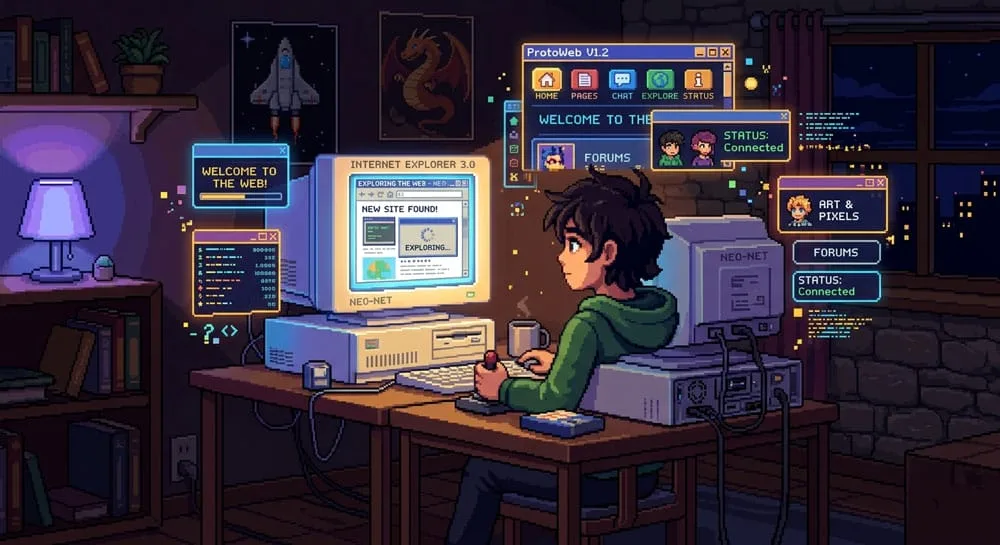
At first glance, a website may seem like nothing more than a collection of text, images, and buttons. In reality, every website is an emotional experience. Just as we enter a physical store and immediately sense luxury, warmth, or disorder, our brains begin judging a website within the first few seconds. These judgments are often unconscious, but they profoundly affect our behavior: whether we stay, trust it, make a purchase, or close it immediately.
The psychology of web design studies these very mental and emotional responses. Through colors, typography, layout, images, and white space, web designers can evoke specific feelings in users. These may include trust, calm, excitement, curiosity, or even anxiety. Understanding this shows us that web design is not merely a technical matter, but a combination of art, psychology, and human experience.
First Impressions: A Few Decisive Seconds
Research shows that users decide within the first few seconds whether a website is worth staying on. In this brief time, the human brain looks for signs of order, beauty, readability, and credibility. If a site looks cluttered, disorganized, or outdated, users may leave without even reading its content.
This rapid response is a natural function of the brain. Humans have learned to assess their surroundings in a very short time as a matter of survival. The same mechanism is active in the digital world. A web page's initial design can therefore directly affect whether users feel trust or distrust.
The Power of Color in Shaping Emotions
Colors are among the most powerful emotional tools in web design. The human brain naturally responds to color, and each color can convey a particular feeling.
Blue is often associated with trust, security, and calm. That is why many technology companies and banks use it. Red is energetic and stimulating, and can create a sense of urgency or enthusiasm. Green is usually associated with nature, health, and balance. Dark colors and black can convey luxury and power.
But the issue is not just choosing a color; color combinations matter greatly too. A harmonious color palette can create a sense of order and professionalism, while mismatched colors may cause mental confusion.
Typography and a Website's Personality
Fonts also play an important role in conveying emotion. Just as tone of voice matters in speech, the type of font used in writing carries a particular emotional message.
Simple, modern fonts usually create a technological, professional impression. Classic fonts can feel formal and trustworthy. Handwritten or decorative fonts, by contrast, often suggest creativity and warmth.
If a financial website uses overly decorative fonts, users may consider it unprofessional. Conversely, if an arts website uses very stiff, formal fonts, it may lose its creative spirit.
Font choices should therefore align with a website's identity and purpose.
White Space and a Sense of Calm
One of the most important elements in web design, and one often overlooked, is white space. White space refers to areas of a design without content. Contrary to common belief, these areas are not wasted; they help the brain process information more easily.
Websites that use white space well usually convey calm, order, and professionalism. By contrast, cluttered sites with every element crammed together may cause mental fatigue.
That is why many large, luxury brands use minimalist designs. In such designs, every element is carefully chosen, with enough room for visual breathing space.
Images and Emotional Storytelling
Images are one of the fastest ways to build an emotional connection with users. The right image can create a particular feeling in a fraction of a second—something that might take several paragraphs of text to explain.
For example, real photographs of people can create warmth and trust. Nature images can convey calm and inspiration. Overly artificial or low-quality images, by contrast, may feel unreal or unprofessional.
Choosing images for web design is therefore not merely decorative; it is part of a site's emotional storytelling.
Layout and the User's Mental Path
The arrangement of elements on a web page also plays an important role in how users feel. The human brain naturally follows patterns and expects information to be presented in a logical structure.
For example, many users are accustomed to seeing the logo at the top left, the main menu across the top, and the primary content in the center of the page. When a site follows these familiar patterns, users feel more comfortable and in control.
By contrast, if a site's structure is too unusual or complicated, users may become confused.
Motion and Interaction
Animations and small interactions can also change how users feel. When a button changes color slightly as the mouse moves over it, or an element appears gently, the user experience becomes livelier and more engaging.
These interactions, known as microinteractions, make users feel they are interacting with a dynamic, intelligent environment. Of course, too much animation may distract users or slow the experience down.
Trust: The Most Important Feeling Online
In the online world, trust is one of the most important feelings a website must inspire. If users do not trust a site, they are unlikely to enter personal information or make a purchase.
Professional design, suitable colors, security indicators, user reviews, and an orderly structure can strengthen trust. Even details such as image quality, text readability, and site speed contribute to this feeling.
Emotional Design and the Future of the Web
As technology advances, web design is moving toward more emotional experiences. Today, designers think not only about functionality but also about how users feel while using a site.
Emotional Design is an approach aimed at creating a human connection between users and digital products. In this approach, a website should not only be useful, but also inspiring, enjoyable, and even memorable.
In the future, by combining artificial intelligence, augmented reality, and interactive design, websites will be able to create more personalized experiences. This means each user may see a slightly different version of a website, tailored precisely to their preferences and feelings.
Conclusion
Web design is much more than arranging graphic elements. Every color, font, space, and image can create a particular feeling in a user's mind. Ultimately, these feelings determine whether users connect with a site.
Understanding the psychology of web design helps us build experiences that are not only beautiful and useful, but also meaningful and enjoyable for users. When design can evoke positive feelings, a website is no longer merely a digital tool; it becomes a place users connect with and return to again and again.


