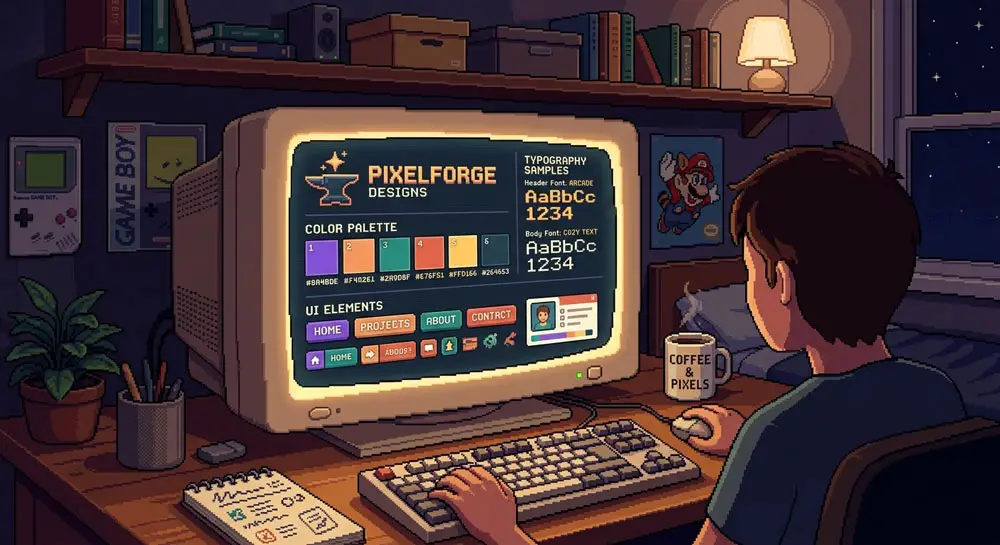
How Branding Shapes a Website’s Emotional Experience
Brand identity is not just a logo or color combination; it is a collection of visual, behavioral, and content cues that communicate a business’s character to users. When users enter a website, they encounter this character immediately—even before reading a word. The right brand identity can inspire trust, warmth, professionalism, energy, or creativity; the wrong one can create confusion, inconsistency, or even distrust.
This article explores how brand identity affects users’ feelings on a website, which elements create that identity, and how designers can use branding to shape the emotional experience.
What Is Brand Identity?
Brand identity is the set of characteristics a company presents to the world. It combines tangible and intangible elements:
- Colors
- Typography
- Logo and graphic style
- Writing tone and verbal content
- Values and key messages
- User experience
- The brand’s behavioral personality
On a website, these elements come together to convey an overall feeling to users—a feeling that takes shape in just a few seconds.
Why Does Brand Identity Affect Users’ Emotions?
The human brain looks for predictable patterns, consistency, and behavioral cues. Brand identity is a “storyline” users rely on to interpret a site’s personality.
Emotional effects of brand identity:
- Greater trust
- Longer time spent on the site
- Stronger loyalty
- Positive associations
- Greater brand recall
When brand identity is strong, even elements such as navigation, forms, or CTAs feel more “meaningful,” “predictable,” and “comfortable” to users.
Colors: The First Pillar of Emotional Identity
Colors are among the most important elements of brand identity because they trigger immediate emotional responses.
Examples:
- Blue in finance or technology brands = trust and professionalism
- Orange in youth-oriented brands = excitement and energy
- Green in nature-oriented brands = calm, health, and sustainability
- Black in luxury brands = power and seriousness
A website has a powerful brand presence when its colors are consistent throughout—from the header and buttons to images and CTAs.
Typography: What Fonts Say Without Words
Fonts also create emotional identity. Typography directly affects how users perceive a brand’s personality.
Examples:
- Modern geometric fonts = innovation and technology
- Classic serif fonts = credibility, seriousness, and heritage
- Handwritten fonts = warmth and humanity
- Bold, heavy fonts = strength and confidence
Professional websites typically use two or three defined fonts consistently throughout. This consistency creates a sense of stability.
Logo and Graphic Style: The Brand’s Visual Signature
The logo is a starting point, but graphic style goes beyond the logo:
- Card corner shapes (rounded or sharp?)
- Icons (minimal or decorative?)
- Shadows (subtle or strong?)
- Images (photographic or illustrated?)
These elements determine whether a website feels formal, friendly, luxurious, modern, or creative.
Any inconsistency among these elements can make a brand feel “immature” or “unstable.”
Writing Tone: The Brand’s Voice in the User’s Mind
Content tone is one of a brand’s strongest emotional tools. Users understand a brand’s personality through its writing.
Common tones:
- Friendly and simple: suited to lifestyle brands or early-stage SaaS companies
- Professional and formal: suited to financial or B2B companies
- Inspirational: suited to educational, cultural, or artistic projects
- Humorous: suited to youth-focused and entertainment brands
The right tone makes users feel they are connecting with a “real personality.” The wrong tone creates confusion, mixed signals, or distrust.
User Experience (UX): When Brand Identity Shows in a Site’s Behavior
Brand identity is not only about appearance; it is also expressed in how a site behaves. UX is an emotional language.
Examples:
- A calming brand → gentle animations and plenty of white space
- A technology brand → fast animations, cool colors, and sharp lines
- A luxury brand → minimal design, large images, and subtle shadows
- A friendly brand → rounded buttons and colorful illustrations
When UX aligns with brand identity, it creates a deeply cohesive and emotional experience.
Content and Storytelling: Building a Lasting Emotional Connection
A brand story can deepen users’ emotions. Users relate to real stories, not advertising slogans.
Effective storytelling elements:
- The story of how the brand began
- Mission and values
- Introducing the team
- Stories from real customers
- The brand’s approach to solving problems
A good story makes a brand “human”—and humanity is key to trust and positive feelings.
Consistency: The Key to Building Trust
When all the elements mentioned above are aligned and consistent, the brand becomes “predictable” to users—and predictability means feeling safe and trustworthy.
Inconsistency in:
- Colors
- Fonts
- Messages
- Images
- Even button sizes
can seriously undermine the brand’s sense of professionalism.
Brand Identity and Conversion: How Emotions Shape Behavior
A strong brand identity influences user behavior:
- Users spend more time on the site
- They click buttons more readily
- They enter personal information with confidence
- They become more loyal to the brand
- Purchase or sign-up rates rise
The reason is simple: when a brand develops a “personality,” users feel they are interacting with a human presence, not a soulless system.
Conclusion: Brand Identity Is a Website’s Emotional Experience
Brand identity is not something merely seen; it is something felt. Users judge websites by how they make them feel, and those feelings are shaped by many small and large elements.
To create a strong, influential brand identity:
- Choose the right colors
- Use consistent typography
- Create a unified graphic style
- Maintain a clear, consistent tone
- Align UX with the brand’s personality
- Bring the brand story to life
- Be consistent in everything
When these elements come together effectively, a website is not only beautiful and functional; it also creates a positive, trustworthy, and lasting impression in users’ minds.


